Blog
Engineering Steel Pipes in India: What Should Industrial Buyers Really Look For?

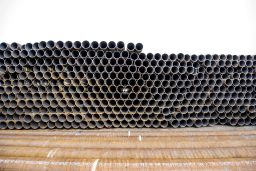
Engineering steel pipes are specification-driven, performance-critical components used across India’s oil & gas, power, infrastructure, and industrial sectors. Selecting the right engineering steel pipe supplier goes far beyond price — it requires evaluating grade authenticity, compliance documentation, dimensional precision, storage discipline, logistics capability, and market stability.
Since 1988, Madras Steels and Tubes has operated within this demanding ecosystem, supporting Indian industry through technical alignment, reliable stocking, and execution-focused supply practices.
What Makes Engineering Steel Pipes Different from Ordinary Steel Pipes?
Engineering steel pipes are not generic tubular products. They are manufactured and supplied as per defined standards such as:
- IS 1239 / IS 3589 / IS 4923
- API 5L
- ASTM A106 / A335 / A312
- IS 1914 (boiler grade applications)
They are deployed in environments involving:
- High pressure
- Elevated temperature
- Corrosive chemicals
- Structural load-bearing
- Government-regulated compliance
In such applications, even marginal deviations in chemistry, wall thickness, or documentation can have operational consequences.
Why Is Grade Compliance the First Filter in Supplier Selection?
Indian industrial procurement frequently operates under PSU and EPC specifications. These require:
- Authentic Mill Test Certificates (MTCs)
- Heat number traceability
- BIS compliance where applicable
- Conformance to tender specifications
Grade substitution — even if chemically close — can result in inspection rejection or long-term performance risk.
An experienced supplier understands that compliance is not a paperwork formality; it is a technical obligation.
How Do Dimensional Tolerances Affect Project Execution?
Engineering pipes must conform to strict OD, ID, and wall thickness tolerances.
Variations can lead to:
- Welding misalignment
- Hydrotest failure
- Fabrication delays
- Increased on-site rectification cost
Pre-dispatch inspection, calibrated measurement, and batch verification become essential quality safeguards.
What Role Does Storage and Handling Play in Pipe Integrity?
India’s climate diversity introduces unique challenges:
- Coastal corrosion (Chennai, Mumbai)
- High heat exposure (Rajasthan)
- Monsoon humidity (Eastern India)
Improper storage may result in:
- Surface pitting
- Galvanization damage
- Coating degradation
- Rust scaling before installation
Structured yard management, segregation by grade, FIFO discipline, and controlled loading practices directly impact delivered material quality.
Why Does Inventory Depth Matter in Engineering Projects?
A typical industrial requirement rarely involves a single category. Projects often demand combinations such as:
- Carbon steel seamless
- Alloy boiler pipes
- Stainless process pipes
- SAW transmission pipes
- Structural RHS sections
Fragmented sourcing increases inspection coordination and commercial complexity.
A technically aligned supplier with multi-category capability simplifies procurement and reduces project risk.
How Does Steel Price Volatility Influence Procurement Decisions in India?
Indian steel pricing fluctuates due to:
- Raw material imports
- Domestic production policy
- Global billet and coking coal trends
- PSU tender cycles
Suppliers with market tenure develop forecasting sensitivity — enabling buyers to mitigate escalation exposure and budget deviation.
Why Does Longevity in This Segment Indicate Capability?
Engineering pipe supply is a high-accountability segment. Long-term presence suggests:
- Sustained compliance discipline
- Established mill relationships
- Logistics coordination strength
- Familiarity with evolving Indian standards
- Adaptability across economic cycles
Operating since 1988, Madras Steels and Tubes has navigated multiple phases of India’s infrastructure expansion — from early industrial growth to contemporary mega-project execution.
Leadership in this domain is demonstrated through continuity, not marketing language.
What Ultimately Differentiates a Reliable Engineering Pipe Partner?
The difference lies in:
- Specification understanding
- Technical documentation accuracy
- Inspection readiness
- Delivery discipline
- Commercial stability
- Post-supply responsiveness
Engineering steel pipes are not merely supplied — they are integrated into mission-critical systems.
Why Is Chennai Considered a Stronghold for Automotive & Industrial Engineering Pipes?
Chennai is often called the Detroit of India. Its engineering pipe consumption is heavily influenced by:
Dominant Industries
- Automotive OEMs & Tier-1 vendors
- Heavy engineering fabrication
- Petrochemicals (Manali belt)
- Thermal power plants
- Shipbuilding
Most Consumed Pipe Categories
- Seamless precision tubes (automotive applications)
- Carbon steel pipes (industrial fabrication)
- Boiler tubes (power plants)
- Alloy steel pipes (thermal & refinery support)
- RHS / structural hollow sections (PEB & industrial sheds)
Demand Characteristic
- High tolerance requirement
- Smaller OD precision tubes
- Regular repeat consumption
- Vendor qualification focused
Chennai’s market is technically disciplined and specification-sensitive. As one of the leading steel pipe suppliers for automobile industries, we demonstrate expertise by delivering reliable solutions for major clients across this domain.
Why Does Bangalore Lean Toward Structural & Infrastructure Pipes?
Bangalore’s industrial ecosystem is different.
Dominant Industries
- Aerospace & defence
- IT parks & commercial real estate
- Warehousing & logistics
- Metro rail expansion
- Renewable energy structures
Most Consumed Pipe Categories
- RHS / SHS structural hollow sections
- MS pipes for fabrication
- GI pipes for commercial buildings
- Limited but selective stainless steel pipes (clean room, biotech)
Demand Characteristic
- Structural grade preference (IS 4923 YST 240/310)
- PEB-focused procurement
- Project-driven buying
Bangalore’s demand is infrastructure and structure-heavy rather than process-piping dominant.
Why Is Mumbai a High-Value Engineering Pipe Market?
Mumbai and the surrounding Maharashtra belt represent one of India’s most diversified consumption zones.
Dominant Industries
- Oil & gas (ONGC offshore, Mumbai High)
- Refineries (BPCL, HPCL)
- Chemicals & pharma
- Infrastructure & metro
- Port-related fabrication
Most Consumed Pipe Categories
- API 5L carbon steel pipes
- Seamless high-pressure pipes
- Stainless steel 304 pipes
- Alloy steel (A335 P11/P22)
- SAW pipes for transmission
Demand Characteristic
- High specification intensity
- Offshore & corrosion-resistant requirements
- Inspection-heavy supply
- Coastal corrosion sensitivity
Mumbai is one of the highest-value engineering pipe markets in India.
Why Does Delhi NCR Focus on Infrastructure & Fire Systems?
Delhi NCR (including Noida, Gurugram, Ghaziabad) is construction-driven.
Dominant Industries
- Commercial real estate
- Government infrastructure
- Metro rail
- Industrial sheds
- Data centres
Most Consumed Pipe Categories
- GI pipes (firefighting & water lines)
- MS pipes
- RHS / SHS
- IS 3589 water transmission pipes
- Limited stainless (commercial HVAC)
Demand Characteristic
- Tender-based procurement
- Large-volume structural sections
- Municipal water projects
- Fire safety compliance-driven buying
Delhi NCR is more civil-infrastructure oriented than heavy process-piping oriented.
Why Is Kolkata Strategically Important for Eastern India?
Kolkata acts as a gateway to Eastern and North-Eastern industrial markets.
Dominant Industries
- Steel plants (Durgapur belt proximity)
- Thermal power
- Railways
- Port & ship repair
- Tea & agro processing
Most Consumed Pipe Categories
- Carbon steel pipes
- Boiler tubes
- MS structural pipes
- SAW pipes (water & irrigation)
- Limited stainless usage
Demand Characteristic
- PSU-driven procurement
- Power plant focus
- Bulk but cost-sensitive buying
- Water & irrigation emphasis
Eastern India’s demand is strongly power-sector influenced.
Frequently Asked Questions (FAQs)
Q1: Are engineering steel pipes only used in oil & gas projects?
No. They are extensively used in power plants, water transmission, infrastructure, pharma, petrochemicals, and structural applications across India.
Q2: How important is BIS certification for engineering pipes?
For many Indian government and infrastructure projects, BIS compliance is mandatory. Non-compliance can lead to tender rejection.
Q3: Is seamless always better than welded pipes?
Not necessarily. Seamless pipes are preferred for high-pressure applications, but SAW and ERW pipes are highly suitable for transmission and structural uses when specified correctly.
Q4: What documents should buyers insist on before dispatch?
- Mill Test Certificates
- Heat number traceability
- Inspection reports
- Compliance confirmation with applicable IS / ASTM / API standards
Q5: How can buyers reduce procurement risk?
By selecting suppliers with:
- Proven tenure
- Multi-category stocking
- Strong documentation discipline
- Transparent grade clarity
- Logistical execution capability
Closing Perspective
India’s industrial expansion continues to accelerate — in energy corridors, metro rail networks, water grids, and manufacturing clusters.
Engineering steel pipes remain foundational to this growth.
In such a technical and execution-driven environment, experience accumulated over decades becomes a practical advantage. Since 1988, Madras Steels and Tubes has remained aligned with India’s engineering ecosystem — contributing through steady, standards-driven supply rather than overt visibility with branches across 5 major cities in India including Chennai, Bangalore, Delhi, Mumbai and Kolkata.
Do contact us for any diverse requirements of engineering steel pipes across India.
Engineering Steel Pipes in Chennai
Engineering Steel Pipes in Bangalore
Engineering Steel Pipes in Mumbai
Engineering Steel Pipes in Delhi
Engineering Steel Pipes in Kolkata
Feel free to reach us at 88255 12356 or ayush@madrassteels.in for any feedback or queries.