Blog
Buying Steel Pipes in India’s Major Cities

Table of Contents
- 1 A Practical, City-Wise Guide for Chennai, Delhi, Mumbai, Kolkata & Bangalore Buyers
- 2 How Steel Pipe Demand Changes by City
- 3 Steel Pipes in Chennai: Industrial Strength & Infrastructure First
- 4 Steel Pipes in Delhi: Government Projects & Utility Networks
- 5 Steel Pipes in Mumbai: Commercial Projects & Coastal Conditions
- 6 Steel Pipes in Kolkata: Wholesale & Eastern India Supply Hub
- 7 Steel Pipes in Bangalore: Commercial, Tech & Clean Industries
- 8 How Buyers Should Choose a Steel Pipe Supplier (Across Any City)
- 9 Final Thoughts
- 10 FAQs – Buying Steel Pipes in India’s Major Cities
A Practical, City-Wise Guide for Chennai, Delhi, Mumbai, Kolkata & Bangalore Buyers
Buying steel pipes in India is no longer just about finding a supplier — it’s about finding the right product, in the right city, for the right application, at the right time.
Search behaviour across cities like Chennai, Delhi, Mumbai, Kolkata, and Bangalore clearly shows one thing:
buyers are no longer searching generically for “steel pipes” — they are searching city + product + intent.
This guide brings all of that together into one clear narrative, helping you understand:
- What buyers in each city are actually looking for
- Which steel pipe products dominate each market
- What questions decision-makers are asking before buying
- How to choose the right supplier across cities
How Steel Pipe Demand Changes by City
Every metro city in India has a different industrial personality.
- Chennai is driven by manufacturing, Automotive industry needs, ports, and infrastructure
- Delhi NCR is powered by government projects and utilities
- Mumbai balances commercial construction and coastal challenges
- Kolkata acts as a wholesale and eastern-India supply hub
- Bangalore is shaped by commercial, tech, and clean-industry needs
This directly influences which steel pipes are searched, specified, and purchased.
Steel Pipes in Chennai: Industrial Strength & Infrastructure First
In Chennai, buyers consistently search for:
- GI pipe in Chennai
- Hollow section manufacturers in Chennai
- Pipe manufacturers in Chennai
- Jindal pipes Chennai
As shown from our Looker Studio report*
This reflects Chennai’s strong base of factories, warehouses, ports, and large infrastructure projects.
GI Pipes in Chennai
Galvanized Iron (GI) pipes are widely used in:
- Water supply systems
- Firefighting pipelines
- Outdoor and exposed piping
What Chennai buyers care about most:
- Zinc coating thickness
- IS compliance
- Long-term corrosion resistance
Answer Capsule – Chennai
Q: Why are GI pipes so commonly used in Chennai?
A: Because Chennai’s climate and infrastructure needs corrosion-resistant, long-lasting piping solutions.
Hollow Section Pipes in Chennai
Hollow sections (square and rectangular) are heavily used in:
- Structural fabrication
- Industrial sheds
- Pre-engineered buildings
Buyers focus on dimensional accuracy, uniform wall thickness, and brand reliability, especially for load-bearing applications.
Steel Pipes in Delhi: Government Projects & Utility Networks
In Delhi, search queries reveal strong intent around:
- MS pipe dealer in Delhi NCR
- Best MS pipe dealer in Delhi NCR
- DI pipe suppliers in Delhi
- SS pipe manufacturers in Delhi
As Shown in Looker Studio report*
This is driven by municipal projects, EPC contractors, and large commercial developments.
MS Pipes in Delhi NCR
Mild Steel (MS) pipes are used extensively in:
- Structural frameworks
- Scaffolding
- Fabrication and infrastructure
Buyers in Delhi value:
- Consistent weight and thickness
- Ready stock availability
- Reliable logistics across NCR
DI Pipes in Delhi
Ductile Iron (DI) pipes are critical for:
- Municipal water supply
- Drainage and sewage systems
Here, buyers closely verify:
- IS standards (IS 8329 / IS 1536)
- Pressure ratings
- Joint integrity
Answer Capsule – Delhi
Q: Do buyers prefer MS pipe dealers or manufacturers in Delhi NCR?
A: Dealers are preferred for speed and availability, while manufacturers are chosen for bulk or government orders.
Steel Pipes in Mumbai: Commercial Projects & Coastal Conditions
Search behaviour in Mumbai highlights:
- Pipe dealers in Mumbai
- Galvanised steel pipe suppliers in Mumbai
- MS pipe manufacturers in Mumbai
As shown in Looker Studio report*
Mumbai’s demand is shaped by commercial construction, high-rise buildings, and coastal exposure.
Galvanised Steel Pipes in Mumbai
These are preferred for:
- External piping
- Fire lines
- Coastal infrastructure
Buyers look for superior coating quality and corrosion resistance, as salt-laden air significantly impacts pipe life.
MS & Square Pipes in Mumbai
Used across:
- Commercial interiors
- Structural supports
- Fabrication works
Answer Capsule – Mumbai
Q: Why are galvanised pipes in high demand in Mumbai?
A: Mumbai’s coastal climate makes corrosion resistance a critical requirement.
Steel Pipes in Kolkata: Wholesale & Eastern India Supply Hub
In Kolkata, buyers often search for:
- MS pipe manufacturers in Kolkata
- Best MS pipe manufacturers in Kolkata
- MS pipe wholesale dealers Kolkata
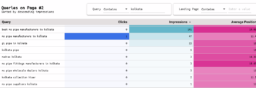
As shown in Looker Studio report *
Kolkata functions as a distribution hub for Eastern India, with strong wholesale networks.
MS Pipes & Pipe Fittings in Kolkata
Applications include:
- Industrial frameworks
- Fabrication units
- Machinery piping
Buyers typically prefer suppliers who can provide pipes and fittings together, reducing procurement complexity.
Answer Capsule – Kolkata
Q: Is Kolkata driven more by manufacturers or dealers?
A: A strong mix of both, with wholesalers playing a key role in regional supply.
Steel Pipes in Bangalore: Commercial, Tech & Clean Industries
In Bangalore, search demand is focused on:
- Wholesale steel dealers in Bangalore
- Stainless steel pipe dealers in Bangalore
- Seamless tube suppliers in Bangalore
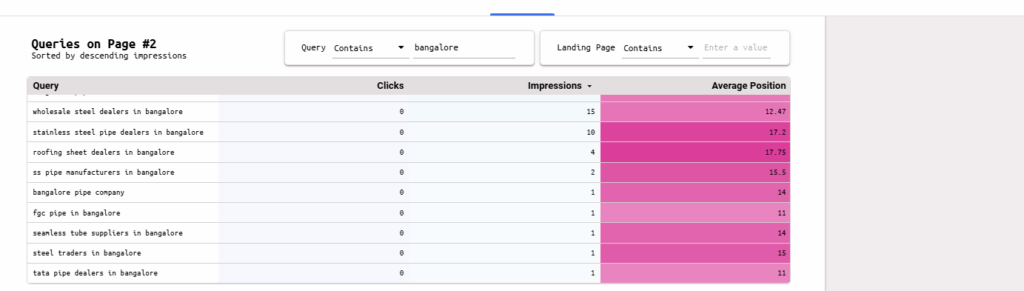
As shown in Looker Studio Report*
Bangalore’s demand comes from commercial buildings, tech parks, and clean industries.
Stainless Steel Pipes in Bangalore
Commonly used in:
- Commercial buildings
- Food processing
- Pharma and clean environments
Buyers prioritize:
- Grade certification
- Surface finish
- Hygiene and corrosion resistance
Seamless Tubes in Bangalore
Used in:
- Pressure applications
- Engineering and industrial projects
Answer Capsule – Bangalore
Q: Why is stainless steel pipe demand high in Bangalore?
A: Due to the concentration of commercial spaces, tech campuses, and hygiene-sensitive industries.
How Buyers Should Choose a Steel Pipe Supplier (Across Any City)
Regardless of city, smart buyers consistently evaluate:
- Product certifications and standards
- Brand authorization and traceability
- Stock depth and delivery timelines
- Ability to supply project-specific quantities
- After-sales and technical support
Final Thoughts
Steel pipe procurement in India is deeply regional.
Understanding what each city demands, searches for, and prioritizes allows buyers to make faster, safer, and more cost-effective decisions.
When buyers align product type + city demand + supplier capability, procurement becomes predictable — not risky.
About Madras Steels and Tubes
Madras Steels and Tubes is one among India’s leading steel pipe dealers with pan-India presence in major cities like Chennai, Bangalore, Mumbai. Delhi and Mumbai operating since 1988. We consult and deliver industrial and steel piping solutions for diverse industries.
Please mail us at ayush@madrassteels.in or reach us at 88255 12356 in case of any feedback or queries on product availability.
Last updated as on Jan 23th, 2026
FAQs – Buying Steel Pipes in India’s Major Cities
1. How does steel pipe demand vary across different cities in India?
Steel pipe demand varies based on regional industries. Chennai focuses on manufacturing and infrastructure, Delhi NCR on government and utility projects, Mumbai on commercial and coastal applications, Kolkata on wholesale supply, and Bangalore on tech and clean industries.
2. Why are GI pipes widely used in Chennai?
GI pipes are widely used in Chennai due to their corrosion resistance, making them suitable for water supply systems, firefighting pipelines, and outdoor installations in coastal and humid conditions.
3. What types of steel pipes are commonly used in Delhi NCR?
In Delhi NCR, MS pipes are widely used for structural and infrastructure applications, while DI pipes are commonly used for municipal water supply and drainage systems in government projects.
4. Why is corrosion resistance important for steel pipes in Mumbai?
Mumbai’s coastal environment exposes pipes to salt-laden air, making corrosion resistance critical. Galvanized steel pipes are preferred for their durability in external and marine applications.
5. What makes Kolkata a key steel pipe supply hub in India?
Kolkata serves as a major wholesale and distribution hub for Eastern India, with strong networks of manufacturers and dealers supplying MS pipes and fittings for industrial and infrastructure projects.
6. Why is stainless steel pipe demand high in Bangalore?
Bangalore’s demand for stainless steel pipes is driven by commercial buildings, tech parks, food processing, and pharmaceutical industries that require corrosion-resistant and hygienic piping solutions.
7. What factors should buyers consider when choosing a steel pipe supplier in India?
Buyers should evaluate product certifications, brand authorization, material traceability, stock availability, delivery timelines, and after-sales support to ensure reliable procurement.
8. How do buyers decide between dealers and manufacturers for steel pipes?
Dealers are preferred for quick availability and smaller orders, while manufacturers are suitable for bulk purchases and project-based requirements with better pricing and customization.
9. What are hollow section pipes and where are they used?
Hollow section pipes, including square and rectangular sections, are used in structural fabrication, industrial sheds, and pre-engineered buildings where load-bearing strength and dimensional accuracy are essential.
10. How can buyers make better steel pipe purchasing decisions across cities?
Buyers can make better decisions by aligning product type with city-specific demand, verifying supplier credibility, comparing quotations, and ensuring compliance with industry standards for long-term performance.