Blog
Industrial Pipes Guide: How to Find the Right Steel Pipe Supplier in India

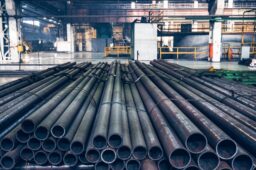
Industrial steel pipes play a critical role across multiple sectors, including automotive, oil & refinery, manufacturing, infrastructure, and other heavy industries. Any quality lapse can affect timelines, disrupt operations, and result in significant cost overruns—from transportation delays to site-level failures.
In this guide, we will explore practical benchmarks that help distinguish a quality steel pipe supplier from the rest. We will break down the key attributes across major pipe categories, including MS Pipes, GI Pipes, Carbon Seamless Pipes, Alloy Steel Pipes, Stainless Steel Pipes, Hollow Section Tubes, Large Dia Pipes, and more.
With more than three decades of domain expertise, we have curated a consolidated checklist of markers you should evaluate for each industrial pipe category to ensure smooth procurement and seamless execution at the project site.
Table of Contents
- 1 Standardized Quality Markers in MS Steel Pipes
- 2 Qualities of a Right MS Steel Pipe Supplier
- 3 GI Pipes – Key Quality Markers to Check
- 4 Carbon Seamless Pipes – Key Quality Markers
- 5 Large Dia Pipes – Key Quality Markers
- 6 Hollow Section Tubes – Key Quality Markers
- 7 Stainless Steel Pipes – Key Quality Markers
- 8 Alloy Steel Pipes – Key Quality Markers
- 9 Boiler Tubes – Key Quality Markers
- 10 FAQs – How to Find the Right Steel Pipe Supplier in India
Standardized Quality Markers in MS Steel Pipes
To ensure consistency, reliability, and field-level traceability, every MS pipe should include:
Standard Color Coding
- Blue Bands → Medium Class
- Red Bands → Heavy Class
Helps site teams and inspection engineers quickly identify the pipe class during handling, fabrication, and installation.
Unique Batch Number + Mill Test Certificate (MTC)
Each pipe must carry a batch number linked to its chemical composition, mechanical properties, and heat number—ensuring full traceability and QA/QC compliance.
Embossed Manufacturer Logo
Permanent embossing prevents mix-ups with substandard market material and confirms authenticity.
End Finish Options
- Bevelled Ends for welding
- Plain Ends for threading, grooving, or coupling
Ensures compatibility with project-specific requirements.
Qualities of a Right MS Steel Pipe Supplier
Your supplier directly impacts the reliability of your project. A credible MS pipe supplier should offer:
- Proven Industry Experience : Prefer suppliers with extensive experience, strong mill relationships, and clear domain understanding.
- Consistent Quality & Compliance : They must adhere to IS/ASTM/API standards, provide MTCs, maintain proper color coding, and ensure correct storage practices.
- End-to-End Traceability : Ability to track each batch from raw material to dispatch, supporting zero-risk procurement and faster audit approvals.
- Product Range & Availability : A dependable supplier typically stocks:
- MS ERW Pipes
- Seamless Pipes
- GI Pipes
- Hollow Sections
- Fabrication-grade materials
- Strong Logistics Capability : Timely delivery, proper packaging, and reliable shipment networks are essential, especially for time-bound projects.
- Technical Guidance & Support : Should provide clarity on thickness selection, class suitability, welding vs. threading, and cost-performance optimization.
- Ethical Pricing & Transparency : No hidden charges, no grade manipulation, and clear billing.
- After-Sales Support : Assistance during inspections and support in case of issues or discrepancies.
GI Pipes – Key Quality Markers to Check
Standards & Compliance
- Conformance to IS:1239, IS:3589, IS:1161
- Galvanization as per IS:4736 (uniform hot-dip zinc coating)
Material Identification
- Standard color coding for light, medium, and heavy classes
- Consistent galvanization inside and outside
Traceability
- Batch numbering linked to properties
- MTCs for every lot
- Embossed or stenciled markings (avoid sticker markings)
End Configuration
- Plain, threaded, and socketed ends
- Threads must follow BSPT/NPT
Carbon Seamless Pipes – Key Quality Markers
Standards & Grades
- Must comply with ASTM/API/IS seamless standards
- Accurate schedule markings (SCH 40/80/160)
Traceability
- Heat and batch numbers on every length
- Complete MTCs with chemical & mechanical values
Authenticity
- Manufacturer embossing or stenciling
- No material without proper markings
End Options
- Plain, beveled, or threaded depending on requirement
Large Dia Pipes – Key Quality Markers
Manufacturing Integrity
- Produced using Submerged Arc Welding (SAW)
- Uniform weld bead, straightness, and alignment
Quality Markers
- Service-based color coding
- Weld traceability markings
- UT/radiography when required
Documentation
- Full MTC with batch/heat numbers
- Coating certificates for 3LPE/Epoxy-coated pipes
End Types
- Plain, beveled, or custom ends (flanges, collars, etc.)
Hollow Section Tubes – Key Quality Markers
Dimensional Accuracy
- Sharp edges, uniform thickness, smooth weld line
- Should meet IS:4923 / EN / ASTM standards
Traceability
- Batch coding on every bundle
- MTCs with chemical & mechanical results
Manufacturing Variants
- Hot-rolled
- Cold-formed
- Direct-formed
Finishes
- Black, galvanized, varnished, or oiled
Lengths
- Standard 6m, 7m, 12m lengths
- Cut-to-size options if required
Stainless Steel Pipes – Key Quality Markers
Grades & Types
- ASTM A312 compliant: 304, 316, 321
- Availability in seamless and welded variants
Quality Testing
- Hydro test
- Penetrant test (PT) for welds
- PMI for correct alloy verification
Surface Finish
- Pickled/passivated
- 180G, 320G, or mirror polish
Handling & Packaging
- No contact with carbon steel
- Use PE wrap, end caps, and nylon lifting belts
Documentation
- MTCs, PMI reports, and finish certificates
- Full traceability through heat numbers
Alloy Steel Pipes – Key Quality Markers
Grades
- P11, P22, P91 or equivalent (ASTM A335/A213)
Traceability
- Batch number and complete MTC
- Markings including size, grade, heat number
End Requirements
- Plain or beveled ends
- Beveling must meet project specifications
Testing
- UT, hardness test, or eddy-current test as required
Boiler Tubes – Key Quality Markers
Material Standards
- SA-210, SA-213, or equivalent boiler-grade materials
Identification
- Grade-based color coding
- Mill markings for heat, size, grade, manufacturer
Testing
- Hydro test
- Eddy-current/UT
- Dimensional accuracy checks
End Preparation
- Plain, beveled, or custom lengths per boiler specs
Brand Selection Matters
Selecting suppliers who source from authorized and reputable manufacturers is crucial.
For example: buying from an authorized Jindal Pipe dealer vs. an unverified local dealer can drastically impact performance, warranty, and compliance.
Packaging, Handling & Logistics
Even if the pipes are of good quality, poor packaging, mishandling, or improper transportation can lead to dents, rusting, end damage, or coating failure.
Ensure suppliers are thorough with:
- End caps
- Proper bundling
- Correct loading/unloading
- Damage clause transparency
- After-delivery support
About Madras Steels
Madras Steels is one of India’s leading industrial steel pipe dealers, with over three decades of expertise in the domain. With branches across major industrial hubs — Chennai, Bangalore, Mumbai, Delhi, and Kolkata—we support seamless material delivery across the country.
FAQs – How to Find the Right Steel Pipe Supplier in India
1. How do I choose the right steel pipe supplier in India?
Choose a supplier with proven industry experience, strong manufacturer relationships, proper certifications, consistent quality, and reliable logistics support across India.
2. What certifications should a steel pipe supplier provide?
A reliable supplier should provide Mill Test Certificates (MTC), BIS/IS compliance, ASTM/API certifications, and full traceability documentation for each batch.
3. Why is traceability important in steel pipe procurement?
Traceability ensures that each pipe can be linked to its manufacturing batch, chemical composition, and mechanical properties, helping in audits and quality assurance.
4. What are the key quality checks for MS steel pipes?
Key checks include color coding, dimensional accuracy, weld quality, batch numbers, MTC availability, and compliance with IS standards.
5. How can I verify the quality of GI pipes before purchase?
Verify zinc coating thickness, IS standard compliance, surface finish, thread quality, and ensure proper documentation such as MTC and galvanization reports.
6. What factors should be considered for seamless and alloy steel pipes?
Check ASTM/API compliance, heat number traceability, schedule markings, pressure ratings, and testing reports like UT or hydro tests.
7. Why is supplier logistics capability important in pipe procurement?
Strong logistics ensures timely delivery, proper packaging, reduced transit damage, and smooth execution of time-sensitive industrial projects.
8. What are the risks of choosing a low-cost steel pipe supplier?
Low-cost suppliers may compromise on material quality, thickness, coating, and documentation, leading to project delays, rejections, and higher long-term costs.
9. How important is after-sales support in steel pipe supply?
After-sales support is crucial for handling inspections, resolving quality issues, managing replacements, and ensuring smooth project completion.
10. Why should I buy steel pipes from authorized dealers?
Authorized dealers ensure genuine products, proper documentation, compliance with standards, and eliminate risks of counterfeit or substandard materials.