Blog
Choosing Epoxy-Coated Steel Pipes from the Right Supplier

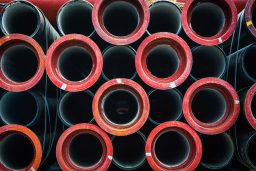
The right epoxy-coated steel pipe is not defined by the coating alone. Buyers need to evaluate the base pipe, coating system, thickness, service environment, testing, handling and the supplier’s ability to understand the complete application.
At Madras Steels & Tubes (MST), our experience of over three decades in industrial steel pipes has taught us that coated pipes should never be purchased purely on diameter, thickness and price.
The same epoxy-coated pipe specification may perform very differently depending on where it is installed, what it carries, how it is handled and what kind of exposure it faces.
As suppliers of industrial steel pipes across India, including Chennai, Bangalore, Mumbai, Delhi and Kolkata, we believe the buying process should begin with the application—not simply with the quotation.
What should you check before buying epoxy-coated steel pipes?
Start by understanding the environment in which the pipe and coating are expected to perform.
A specification that works well for one industrial application may not necessarily be appropriate for another.
Before requesting a quotation, buyers should ideally establish:
- The fluid or material being carried
- Internal or external coating requirement
- Installation environment
- Exposure to moisture, soil or chemicals
- Operating temperature
- Pressure requirements
- Expected service life
- Applicable project or customer standards
These inputs help determine both the correct steel pipe specification and the appropriate epoxy coating system.
Should you choose fusion-bonded epoxy or liquid epoxy?
The coating system should be selected according to the application rather than treated as a generic protective layer.
Fusion-bonded epoxy, commonly known as FBE, is widely used where strong adhesion and consistent corrosion protection are required.
It is commonly considered for pipelines, buried piping and demanding industrial environments.
Liquid epoxy coating systems may be useful for other applications, particularly fabricated components, field joints, repairs and touch-up requirements.
The important question is therefore not simply:
“Is the pipe epoxy coated?”
It should be:
“Which epoxy system is being supplied, and is it suitable for my operating environment?”
That distinction can significantly influence long-term performance.
How important is epoxy coating thickness?
Coating thickness is one of the most important measurable parameters—but thicker does not automatically mean better.
Depending on the coating system and project specification, dry film thickness may commonly fall within ranges such as 300–500 microns, although the actual requirement must always be verified against the governing specification.
Buyers should ask for coating thickness inspection records rather than relying on a verbal description such as heavy epoxy coating.
Thickness should be:
- Appropriate for the application
- Consistent across the pipe surface
- Measured using suitable testing equipment
- Within the specified tolerance
Industrial procurement should always work with measurable specifications rather than descriptive terminology.
How should corrosion resistance be evaluated?
Corrosion protection must be matched to the actual corrosive environment.
A pipeline exposed to atmospheric humidity faces different conditions from one buried underground or carrying chemically aggressive media.
Consider factors such as:
- High-moisture environments
- Underground installation
- Soil chemistry
- Salinity
- Industrial chemicals
- Acids or alkaline exposure
- Internal fluid characteristics
The epoxy formulation and coating system should be compatible with these conditions.
This is why asking only for an epoxy-coated MS pipe or epoxy-coated carbon steel pipe may not provide enough information for a technically sound purchase.
What operating temperature can the coating withstand?
Every coating system has an operating temperature envelope.
Temperature cycling, continuous high-temperature exposure or temperatures outside the coating’s recommended range can eventually affect adhesion and coating integrity.
Before finalising the material, buyers should verify:
- Minimum operating temperature
- Maximum continuous operating temperature
- Temporary temperature excursions
- Manufacturer recommendations
This becomes particularly important in industrial plants, process piping and utility systems.
Does the quality of the base steel pipe still matter?
Absolutely. A high-quality coating cannot compensate for an incorrectly specified base pipe.
The underlying steel pipe must independently satisfy the mechanical and dimensional requirements of the application.
Depending on the project, buyers may need to verify:
- Pipe manufacturing process
- Steel grade
- Outside diameter
- Wall thickness
- Schedule
- Mechanical properties
- Hydrostatic requirements
- Applicable ASTM, API, IS or other specifications
At MST, we consider the coated product as a system comprising both the steel pipe and its protective coating.
Evaluating only one half of that system creates unnecessary procurement risk.
What testing documents should an industrial buyer request?
Documentation separates a technically controlled supply from a commodity purchase.
Depending on the project and coating specification, buyers should consider requesting documents such as:
- Mill Test Certificate (MTC)
- Base material specification
- Coating manufacturer’s details
- Dry film thickness reports
- Adhesion test results where applicable
- Holiday detection or coating continuity test reports where specified
- Inspection certificates
- Relevant compliance documentation
Not every project requires every test.
A knowledgeable supplier should be able to distinguish between necessary documentation and unnecessary paperwork rather than mechanically adding tests to a quotation.
Why does pipe handling matter after coating?
A correctly coated pipe can still be damaged between the coating plant and the project site.
This is one of the less-discussed aspects of coated pipe procurement.
Dragging pipes, improper lifting, metal-to-metal contact, unsuitable stacking or careless unloading can damage the coating even when the material leaves the coating facility in perfect condition.
Buyers should therefore discuss:
- Packing method
- Pipe separation
- Loading practices
- Transportation
- Unloading procedure
- Site storage
For coated steel pipes, logistics becomes part of quality control.
Should you choose a supplier only because they have ready stock?
Availability is important, but technical understanding is more important.
A supplier may have the required diameter and thickness but still be unable to advise whether the pipe grade, coating system or inspection requirement is appropriate for the project.
Industrial buyers should evaluate suppliers based on their ability to understand:
Pipe specification → application → coating requirement → inspection → logistics → documentation.
This becomes particularly important when procurement teams are coordinating between EPC contractors, consultants, end users, coating contractors and pipe manufacturers.
What should you ask an epoxy-coated steel pipe supplier before placing an order?
A serious supplier should be comfortable answering questions such as:
- What is the base pipe manufacturer and grade?
- Which epoxy coating system will be used?
- Is the coating FBE or liquid epoxy?
- What coating thickness will be maintained?
- Which coating standard will be followed?
- Is the coating suitable for the operating temperature?
- Is it compatible with the expected chemical exposure?
- Which inspection reports will accompany the material?
- How will coating damage during transportation be prevented?
- What happens if coating damage is identified at site?
The clarity of the answers often tells you more about a supplier than the quotation itself.
Why should project-specific specifications be clarified before comparing prices?
Two quotations described as “epoxy-coated steel pipe” may actually represent two very different products.
One quotation may include:
- Branded base pipes
- Specified coating thickness
- Surface preparation
- Testing
- Inspection documentation
- Protective packing
- Controlled transportation
Another may simply include a basic coating operation.
Comparing only the per-metre or per-tonne price without normalising these variables can therefore be misleading.
Before commercial comparison, ensure that every supplier is quoting against the same technical scope.
What makes a reliable epoxy-coated steel pipe supplier?
The best supplier should reduce uncertainty, not simply supply material.
Look beyond product availability and evaluate whether the supplier can provide:
- Access to established steel pipe manufacturers
- Multiple sizes and wall thicknesses
- Appropriate industrial grades
- Traceability and MTCs
- Coating coordination
- Inspection support
- Project-specific documentation
- Nationwide logistics capability
- Technical assistance during specification
For industrial projects, this capability can be considerably more valuable than marginal differences in purchase price.
How does MST approach epoxy-coated steel pipe requirements?
At Madras Steels & Tubes, we have spent over 30 years working with industrial steel pipes and tubes across multiple sectors and applications.
Our approach is therefore not to treat an enquiry for epoxy-coated pipes as just another coated steel requirement.
We first try to understand:
Where is the pipe being used?
What is flowing through it?
What environment will it face?
Which steel specification is required?
Which coating specification should govern the supply?
Only then should commercial sourcing begin.
With our industrial pipe supply network, MST supports requirements across Chennai, Bangalore, Mumbai, Delhi, Kolkata and other locations across India, working with customers on both the base pipe specification and the associated coating requirements.
For us, the role of an industrial pipe supplier is increasingly becoming that of a technical procurement partner—helping buyers reduce specification gaps before those gaps become problems at the project site.
Final Takeaway
Epoxy coating can substantially improve the corrosion resistance and service life of steel piping when it is correctly selected and applied.
But buying an epoxy-coated steel pipe should never be reduced to:
Size + thickness + coating + lowest price.
A more reliable procurement equation is:
Correct steel grade + correct coating system + correct thickness + correct testing + correct handling + reliable supplier.
That is ultimately what determines whether a coated pipe performs reliably throughout its intended service life.